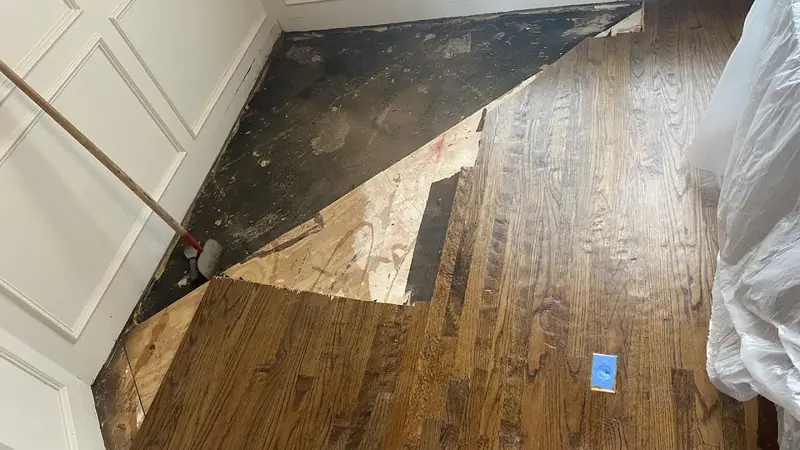
If you have hardwood floor water damage, stop the water, soak up anything standing on the floor, and start drying the room right away with fans and a dehumidifier. Don't sand, nail or cover the boards yet. Once the wood has dried, have its moisture checked with a meter. Many cupped floors flatten out and can be saved, and badly stained or buckled boards can be replaced.
Wood and water don't mix, but water damage to wooden floors is often less permanent than it first looks. What you do in the first day, and how patient you are while the floor dries, decide how much of it can be saved.
What to do in the first 24 hours
- Stop the source. Shut off the water supply to the leaking fixture, or the main valve.
- Remove standing water. Use towels, a mop or a wet-vac. Water sitting on the surface keeps soaking into the seams.
- Pull up rugs and move furniture. Wet rugs hold moisture against the wood, and furniture legs can stain.
- Dry the air and the floor. Run the AC, fans across the floor and a dehumidifier. Open cabinets and closets nearby.
- Take photos. Document the damage and the source before anything is removed, for your records and any insurance claim.
- Call the right help. For a burst pipe, a flooded room or water under walls, call a water-restoration company first to extract the water and dry the structure. We handle the hardwood once it's dry.
How to tell if your hardwood floor has water damage
Some signs show up within hours, and others take days as moisture works its way through the boards.
| Sign | What it usually means | Usual fix |
|---|---|---|
| Cupping (edges higher than centers) | Moisture coming from below or soaking in through the seams | Dry fully, then sand and refinish if it doesn't flatten |
| Crowning (centers higher than edges) | A cupped floor sanded too soon, or water on the surface | Wait, re-check moisture, sand and refinish |
| Buckling or lifting | Heavy or long-term water. Boards pushed up off the subfloor | Remove and replace the affected section |
| Dark gray or black stains | Water reacting with the wood, sometimes mold | Replace the stained boards |
| White or cloudy marks | Moisture trapped in the finish, not the wood | Often a finish-only fix |
| Soft spots or a musty smell | Wet subfloor, possible rot or mold | Open up, dry or replace the subfloor, then repair |
How long wood floors take to dry out
Anywhere from a few days to several weeks, depending on how much water got in, how long it sat, and whether the subfloor got wet too. Don't go by the calendar. Go by readings. A moisture meter compares the wet area with dry wood elsewhere in the house, and repairs start when they're close.
Rushing is the most common mistake. A cupped floor sanded flat while it's still wet will crown as it finishes drying, leaving the centers of the boards high and the finish too thin. Waiting a week or two longer often saves the whole floor.
How to fix hardwood floor water damage
Here's how to repair hardwood floor water damage, from the mildest case to the worst.
White rings and surface marks
When moisture is trapped in the finish but hasn't reached the wood, the mark is often cloudy or white. These sometimes fade on their own as they dry. If they don't, a light screen and recoat, or refinishing that area, usually clears them.
Light cupping that flattens as it dries
Once the boards and subfloor are back to normal moisture, many cupped floors settle nearly flat. Any remaining ridge is sanded level and the floor is refinished. This is where refinishing after repair does most of the work.
Dark stains and rot
Black or dark gray stains go deep into the wood and can't be sanded out. Those boards are cut out and replaced with matching wood, then finished to blend. See our hardwood floor repair service.
Buckling and lifting
When boards have pushed up off the floor, the affected section is removed and the subfloor is checked and dried or replaced. Then new boards are woven in and the area is refinished.
Can mold grow under hardwood floors?
Yes. The EPA advises drying wet materials within 24 to 48 hours to prevent mold, and the space under hardwood is dark and slow to dry (see the EPA guide to mold and moisture). Warning signs are a musty smell that won't go away, dark staining at the seams, and boards that stay soft. If you suspect mold, have it assessed by a mold professional before the floor is closed back up.
Does insurance cover water-damaged hardwood?
It depends on your policy and on how the damage happened. Many homeowners policies cover sudden and accidental water damage, like a burst supply line or a failed water heater. They often exclude damage from slow leaks that went on for a long time, and flooding from outside usually needs separate flood insurance. Call your agent, read your policy, and keep your photos and receipts. The Texas Department of Insurance explains what standard policies cover in its home insurance guide. This is general information, not insurance advice.
Repair or replace? Is water damage permanent?
Not always. Cupping often reverses once the wood dries, and surface marks often clear with refinishing. What's permanent is deep black staining, rot, and boards that buckled hard enough to crack their tongues. Even then, it's usually a section of the floor rather than the whole room. Replacing the full floor only makes sense when the damage is widespread or the subfloor itself is ruined.
How long the fix takes
Drying comes first and sets most of the schedule. After that, board repairs take a day or two, and refinishing follows its usual timeline. Here's how long refinishing takes.
How do you fix swollen floorboards?
Dry them first. Swelling is moisture, and most of it goes away as the wood dries. Sanding or forcing swollen boards flat too early causes new problems. Boards that stay deformed after drying are sanded level or replaced.
Should I put a fan on a wet hardwood floor?
Yes. Fans moving air across the floor, plus a dehumidifier and the AC running, are the right first step. Avoid blasting heat at the boards, which can dry the top too fast and make them crack.
Floor dried out but still warped or stained? We'll check the moisture, tell you what can be saved and give you a written repair price.